
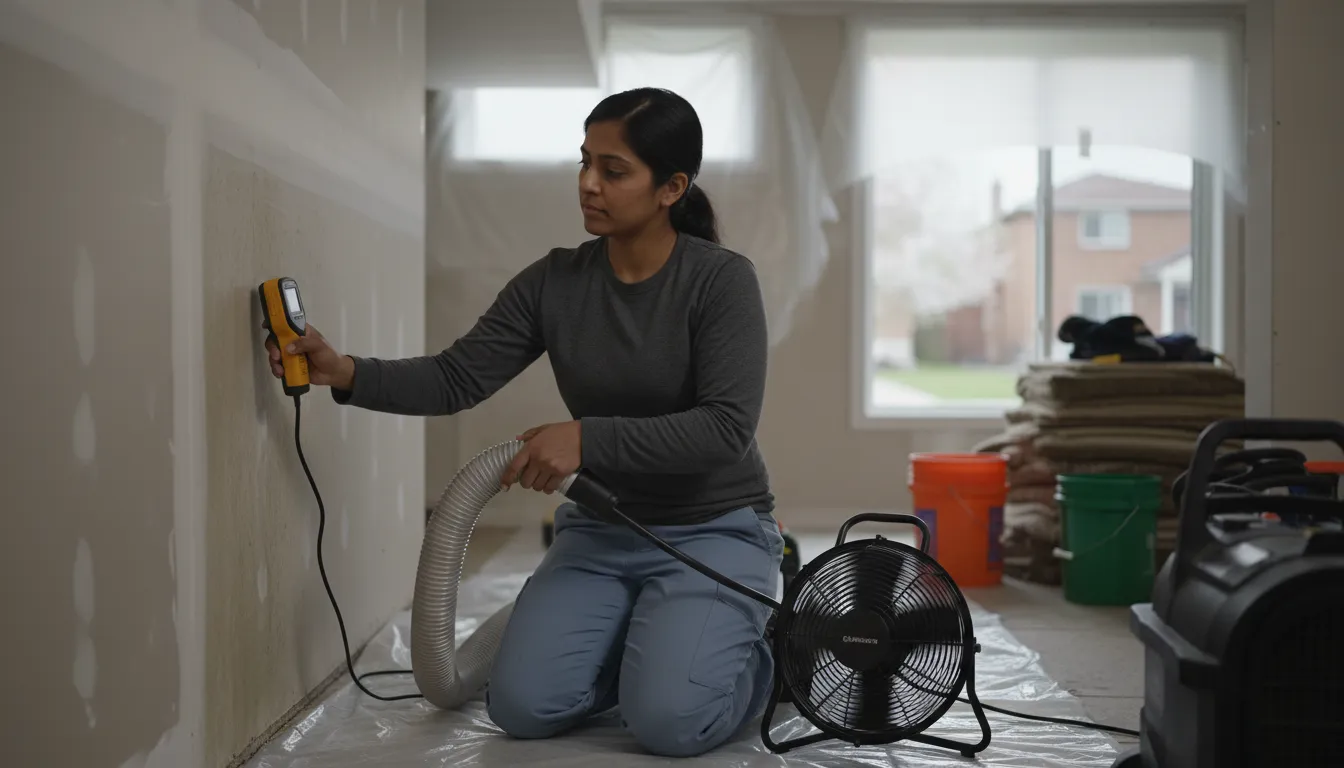
Structural Drying, Backed by Actual Readings
Drying a house properly means tracking moisture until the numbers say it's done — not until a set number of days has passed.
Email Us for a Free EstimateWhy homeowners choose us
Free estimates · No obligation
Why 'a few days of fans' isn't a drying plan
Structural drying is a measured process, not a fixed timeline. Framing, subfloor and masonry all hold and release moisture at different rates, and drying equipment needs to be placed and monitored according to those differences. A quote that promises a flat number of days regardless of the moisture readings is a quote built around convenience, not physics.
Masonry dries slower than drywall
Older GTA homes with brick or block foundations retain moisture longer, which changes both equipment placement and the realistic drying timeline.
Subfloor moisture hides under finished flooring
A floor can feel dry to the touch while the subfloor underneath is still saturated — this only shows up with proper meter readings.
Dehumidification has to match room volume
Undersized dehumidifiers for the affected square footage stretch out drying time and increase the risk of secondary mould growth.
Daily monitoring, not a single check
Moisture levels are tracked at intervals throughout the job so the drying plan can be adjusted if progress stalls.
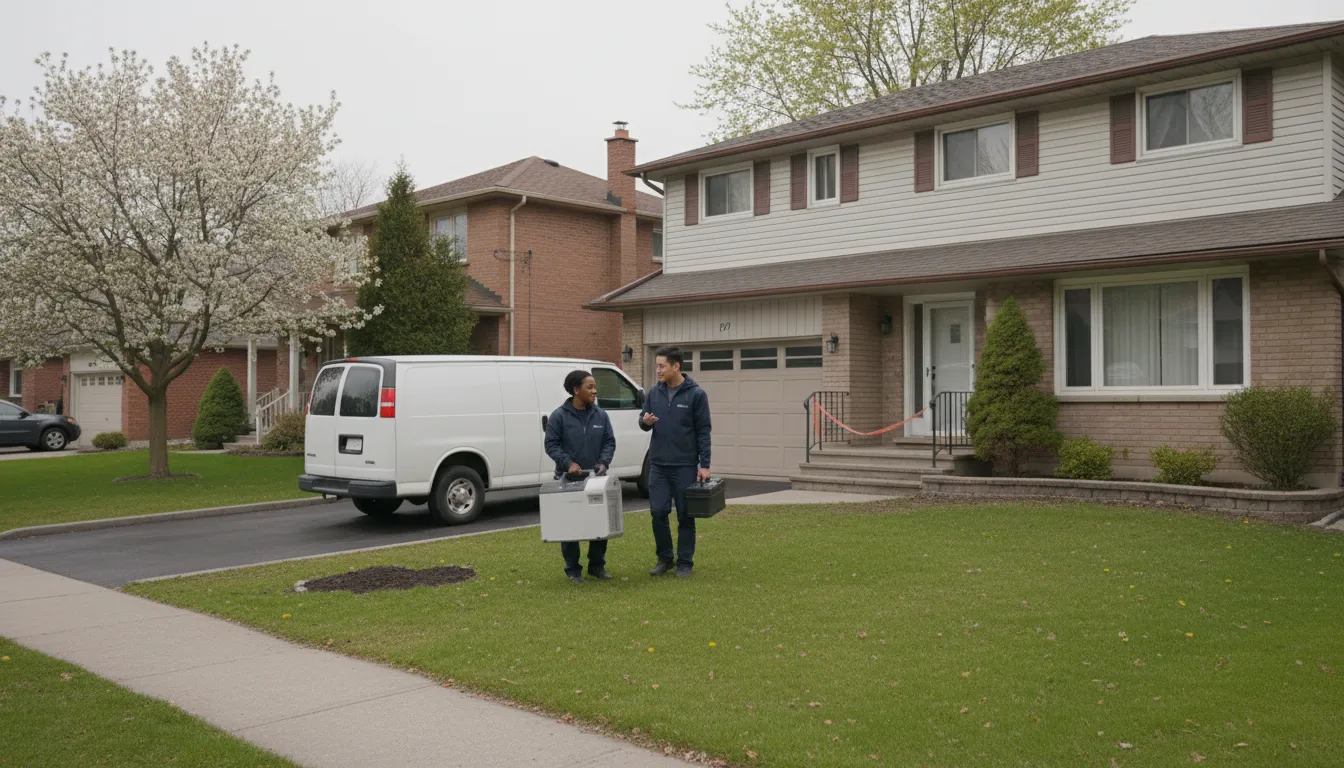
Drying jobs cut short leave hidden moisture behind
It's common for a mitigation crew to pull equipment after a set number of days regardless of what the moisture meter says, because it's faster and looks complete to an untrained eye. Weeks later, trapped moisture in framing or subfloor becomes a mould problem that costs more to fix than the original flood.
We dry to the number, not the calendar
Equipment stays in place until moisture readings return to a normal range for the specific materials involved, and we share those readings with you throughout so you can see the job is actually finished, not just scheduled to look finished.
Our structural drying process
A monitored approach from setup through final confirmation.
- 1
Baseline moisture mapping
We take initial readings across all affected materials to establish the starting point.
- 2
Equipment placement based on the map
Air movers and dehumidifiers are sized and positioned according to the actual moisture spread, not a standard formula.
- 3
Daily monitoring
Readings are checked at intervals and shared with you so progress is visible, not assumed.
- 4
Adjust as needed
If drying stalls in a specific area, equipment or approach is adjusted rather than just waiting it out.
- 5
Confirm normal moisture levels
The job is only called complete once readings for the specific materials involved return to a normal range.
Why homeowners trust our drying numbers
Structural drying is the part of the job that's easiest to fake and hardest to verify after the fact — which is why we document it thoroughly.
You see the actual readings
Moisture data isn't kept internal — it's shared with you as the job progresses.
Equipment matched to the space
Dehumidifier sizing is based on affected volume, not a one-size guess.
We don't rush the finish
Equipment stays until the numbers say it's done, not until a set day passes.
Understand GTA building materials
Older masonry versus newer drywall construction dry at different rates, and we plan for that.
Mould-prevention focused
Thorough drying is the single best defence against a secondary mould problem.
Clear daily updates
You're not left wondering how the drying is progressing.
Structural drying questions
How long does structural drying usually take?
It depends on the materials affected and how deep the moisture travelled — masonry and subfloor typically take longer than drywall. We give you a realistic estimate based on actual readings rather than a flat number.
How do you know when a space is fully dry?
We track moisture meter readings against normal ranges for the specific material — wood, drywall, masonry — and only consider the job complete once those readings hold steady.
Will you show me the moisture readings?
Yes — we share the readings with you throughout the drying process so you can see progress rather than take our word for it.
Do older GTA homes take longer to dry?
Often, yes. Brick and block construction common in older Toronto and Etobicoke homes retains moisture longer than the drywall and modern framing found in newer builds.
What happens if drying stalls partway through?
We adjust equipment placement or add capacity to the specific area that's stalling rather than waiting out a fixed schedule.
Get your structural drying scoped and monitored properly
Email us your situation and we'll explain how we'd map and monitor the drying process for your home.
Email Us for a Free EstimateWeather drives water-damage risk — email us if you find water.
Fall water-damage conditions in Brampton, ON
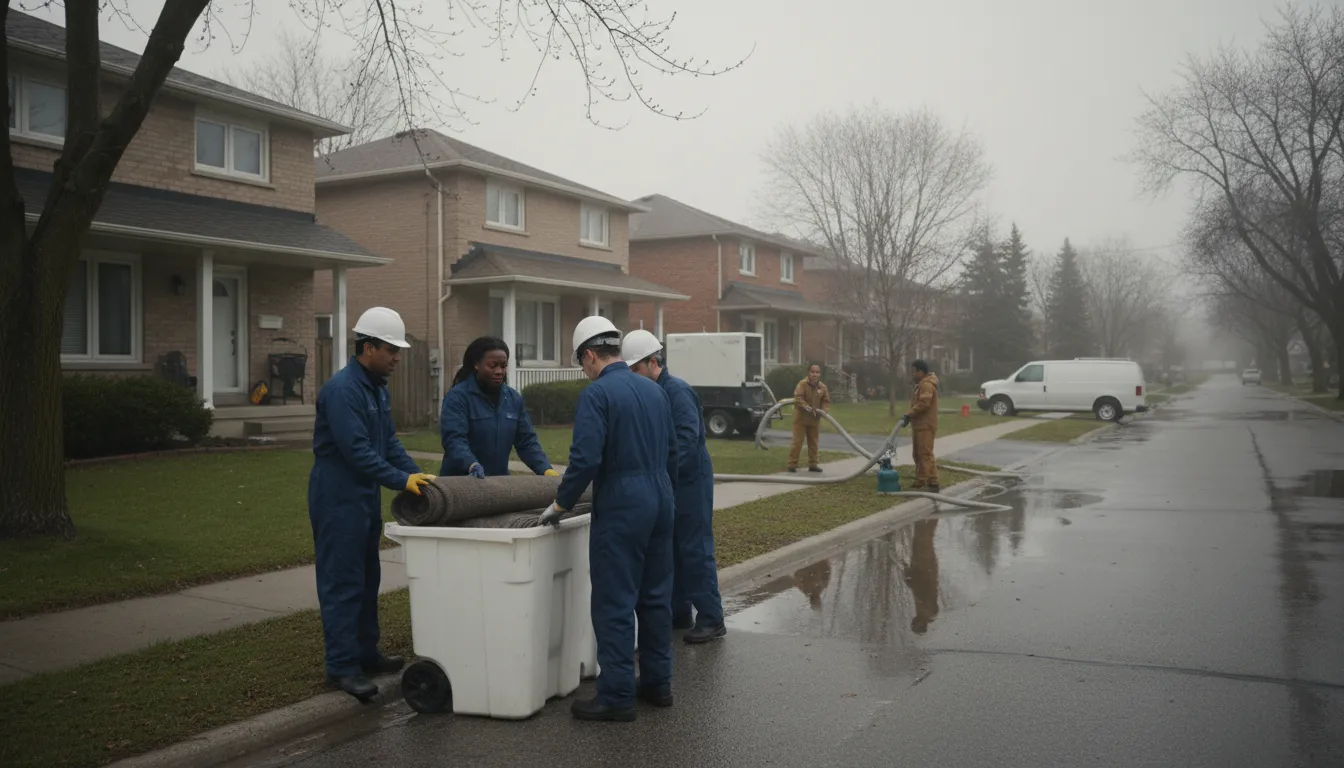
Fall rain around Brampton, ON tests gutters, sump pumps, and foundations; catching leaks and seepage early prevents the slow water damage and mold that surface over winter.
Proudly Serving Brampton, ON
Local, on-time service throughout Brampton and the surrounding area.