
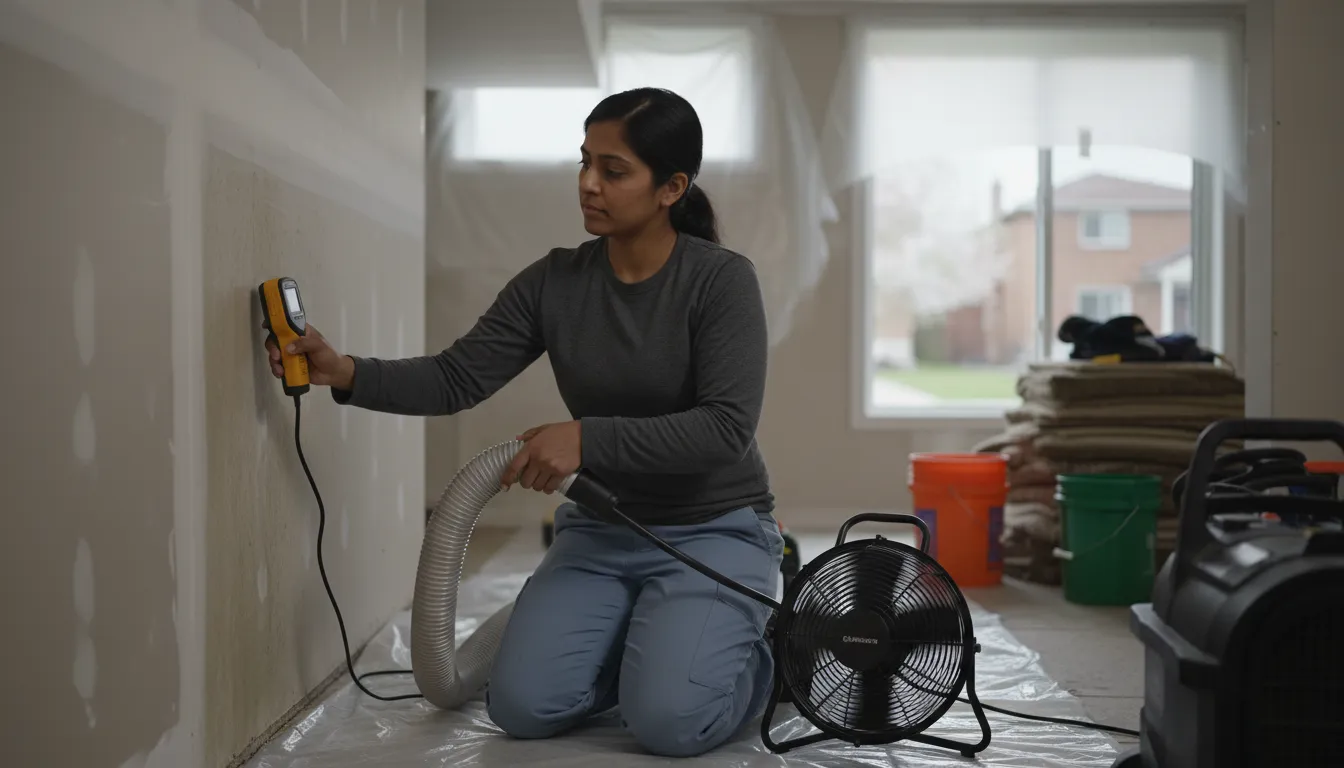
Storm Damage Restoration, Scoped for What Actually Happened
From wind-driven rain to ice damming after a lake-effect snow event, we assess how the water actually got in before we quote a fix.
Email Us for a Free EstimateWhy homeowners choose us
Free estimates · No obligation
Storm damage in the GTA has a few recurring causes
The Greater Toronto Area sees a mix of wind-driven summer storms and winter lake-effect snow events off Lake Ontario, and each creates a different water intrusion pattern. Restoring the damage properly means tracing the actual path water took, not just patching the spot where a stain appeared on the ceiling.
Ice damming after heavy snow
Snow melting from attic heat loss and refreezing at the eaves forces water back under shingles — a pattern we see often after lake-effect snow dumps.
Wind-driven rain intrusion
Storms with strong wind can push rain sideways into siding gaps and window flashing that would never leak in calm rain.
Roof failures from wind or hail
Missing or lifted shingles create a direct path for water that can travel a surprising distance before showing up as an interior stain.
Eavestrough overflow near foundations
Overwhelmed gutters during heavy storms can direct water straight down to the foundation, contributing to basement seepage.
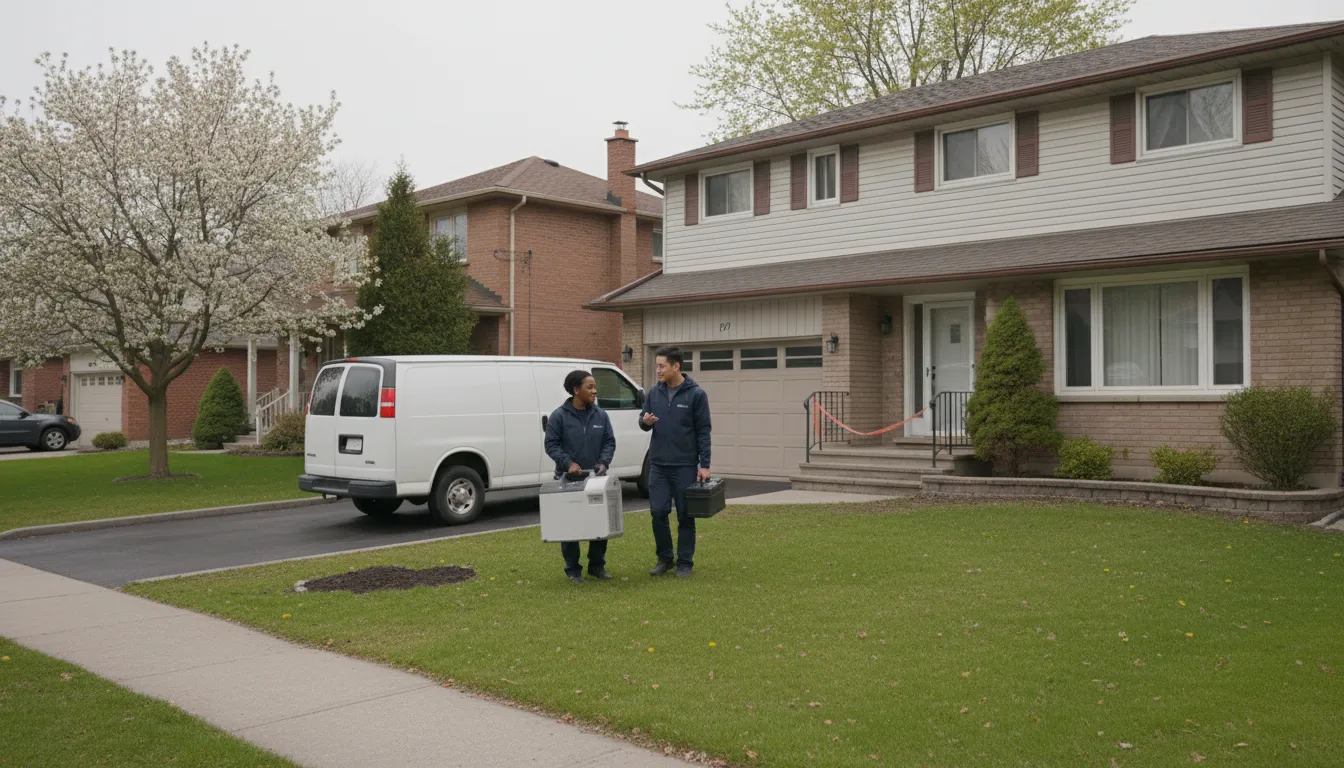
A ceiling stain rarely marks the actual entry point
Water travels along framing and insulation before it shows up as a visible stain, sometimes appearing several feet from where it actually entered. A quote based only on the visible damage often misses secondary wet areas, which surface as a mould problem weeks after the 'repair' was called complete.
We trace the water path before scoping repairs
Our storm damage assessments follow the water from the suspected entry point — roofline, siding, window flashing — through the structure, checking insulation and framing along the way rather than stopping at the first visible stain.
Our storm damage restoration process
A consistent process regardless of whether the damage came from wind, hail, or ice damming.
- 1
Identify the likely entry point
We assess roofing, siding and flashing conditions to determine how water most likely entered.
- 2
Trace the water's path
Moisture readings follow the path through insulation and framing, not just the visible stain.
- 3
Extract and contain
Any standing or trapped water is removed and the area is contained to prevent further spread.
- 4
Structural drying
Air movers and dehumidifiers are placed based on the traced moisture map.
- 5
Restoration and final check
Affected materials are repaired or replaced and moisture levels are confirmed normal before sign-off.
Why homeowners contact us after a storm
Storm damage restoration rewards patience and tracing — exactly the habits our process is built around.
We trace, not just patch
The full water path gets checked before we call a repair complete.
Understand lake-effect snow patterns
Ice damming from lake-effect events is scoped with that specific cause in mind.
Itemized roof-to-interior scope
Exterior repair and interior drying costs are broken out separately, not bundled.
Responsive after major storms
We know storm damage often affects several homes in a neighbourhood at once.
Honest about secondary damage
If insulation or framing needs replacing beyond the visible stain, we say so.
Clear communication throughout
You understand each stage of tracing and repair as it happens.
Storm damage restoration questions
Why did my ceiling stain appear far from the roof leak?
Water travels along the path of least resistance through framing and insulation, so a stain can appear well away from where water actually entered the roof or wall assembly. We trace this path rather than assuming the stain marks the source.
Does ice damming count as storm damage?
Yes — ice damming caused by snow accumulation and freeze-thaw cycling at the roofline is one of the more common storm-related causes we see across the GTA, especially after lake-effect snow events.
Will you also handle the roof repair, or just interior drying?
We scope the full water path and coordinate what's needed, being upfront about which parts are interior restoration versus exterior repair work.
How quickly should storm damage be addressed?
The sooner trapped moisture is addressed, the less likely it is to spread into additional framing or develop into a mould issue. We recommend acting as soon as damage is noticed.
Can storm damage claims go through insurance?
Many storm-related claims are covered depending on your policy. We document the damage thoroughly, but recommend confirming coverage details directly with your insurer.
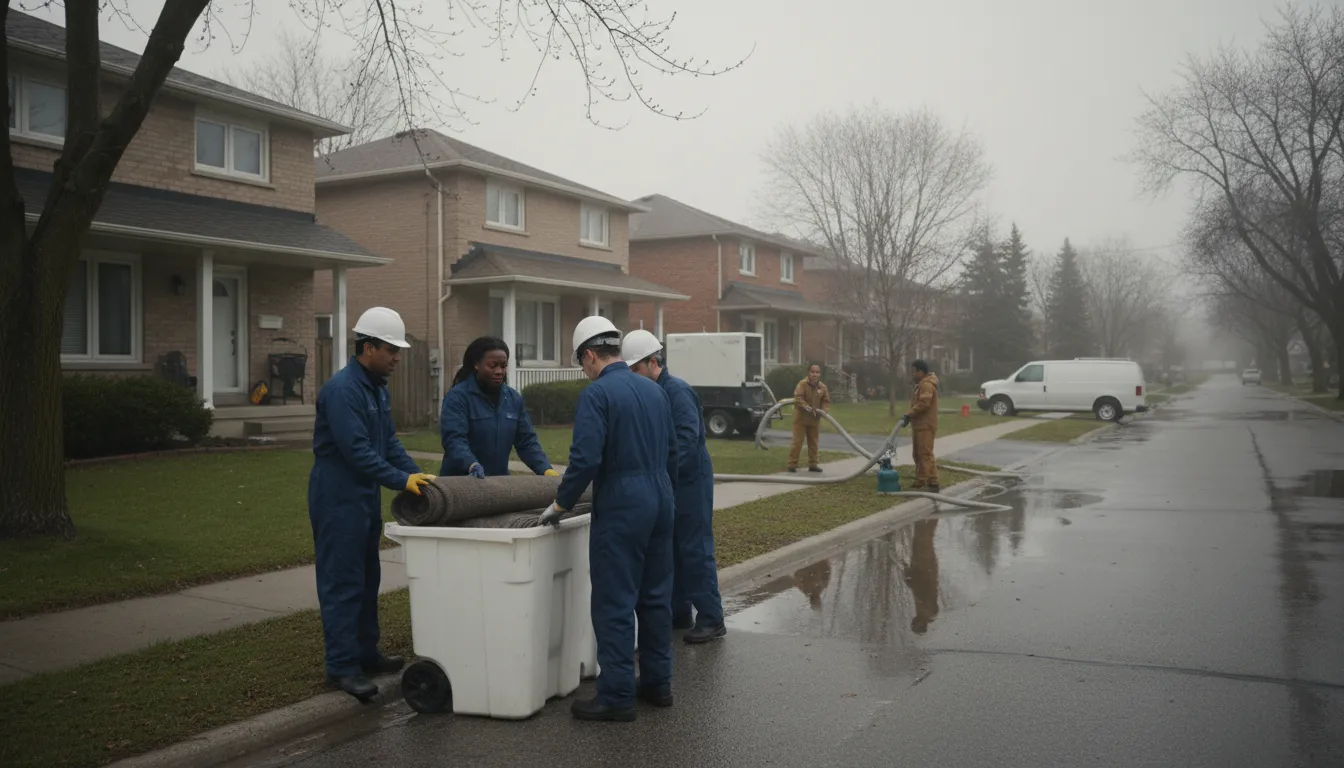
Get storm damage traced and scoped properly
Email us details and photos of the damage and we'll explain what a proper trace-and-repair process looks like.
Email Us for a Free EstimateWeather drives water-damage risk — email us if you find water.
Fall water-damage conditions in Brampton, ON
Fall rain around Brampton, ON tests gutters, sump pumps, and foundations; catching leaks and seepage early prevents the slow water damage and mold that surface over winter.
Proudly Serving Brampton, ON
Local, on-time service throughout Brampton and the surrounding area.