
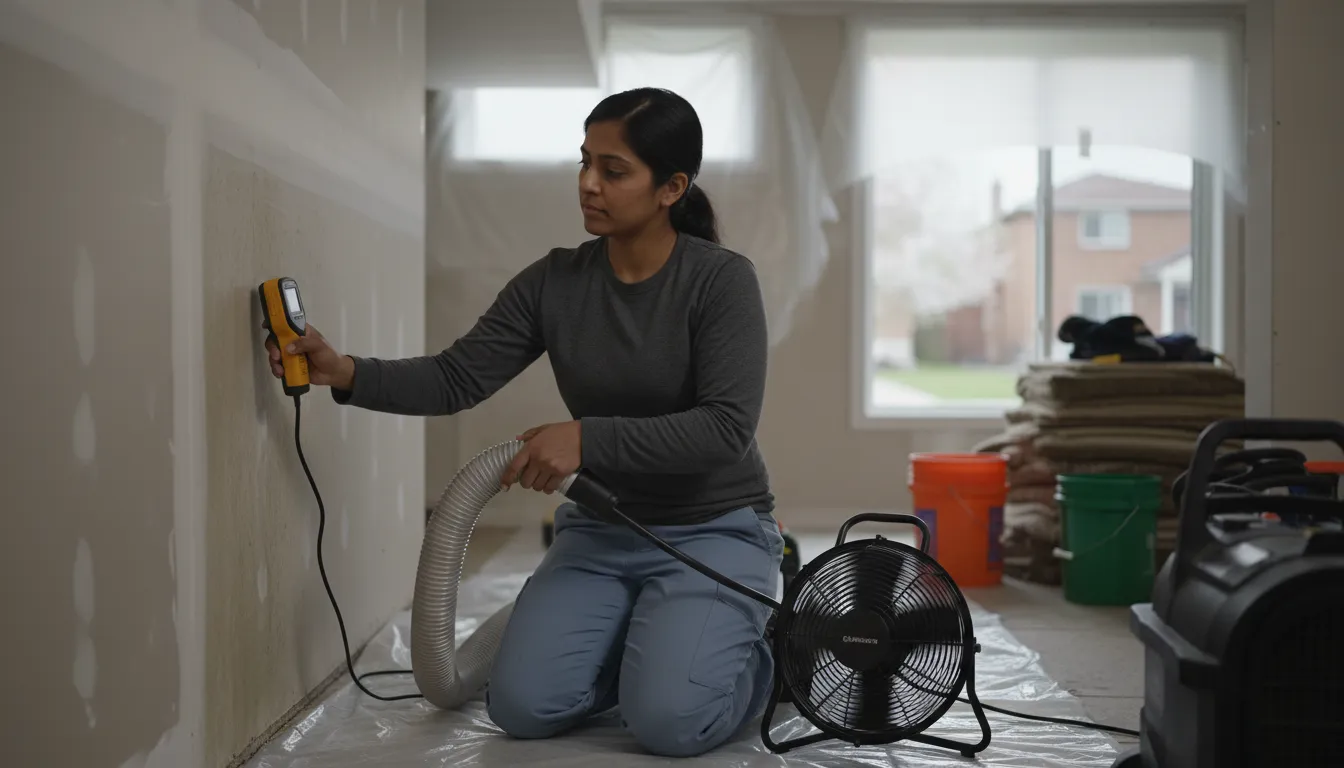
Emergency Water Mitigation, Scoped From Hour One
The first few hours after a pipe burst or basement flood decide how much of your home is salvageable. We move fast and still write down exactly what we're doing and why.
Email Us for a Free EstimateWhy homeowners choose us
Free estimates · No obligation
What emergency mitigation actually involves
Mitigation is the containment phase — stopping water from spreading further into framing, flooring and contents before full drying and repair begins. It's also the phase where rushed, undocumented work does the most long-term damage, because decisions made in the first few hours determine what's salvageable weeks later.
Source containment first
Before extraction starts, we confirm the water source is controlled — otherwise mitigation is just cleaning up a problem that's still active.
Extraction with a plan, not a guess
We remove standing water while noting how far it's travelled — under flooring, into baseboards, up drywall — because that determines the real scope.
Contents triage
Furniture and belongings get assessed for what can be dried on-site, what needs off-site treatment, and what's a loss. We tell you which is which.
Documentation as we go
Photos and moisture readings are taken throughout mitigation, both for your insurer and so you can see the job's progress yourself.
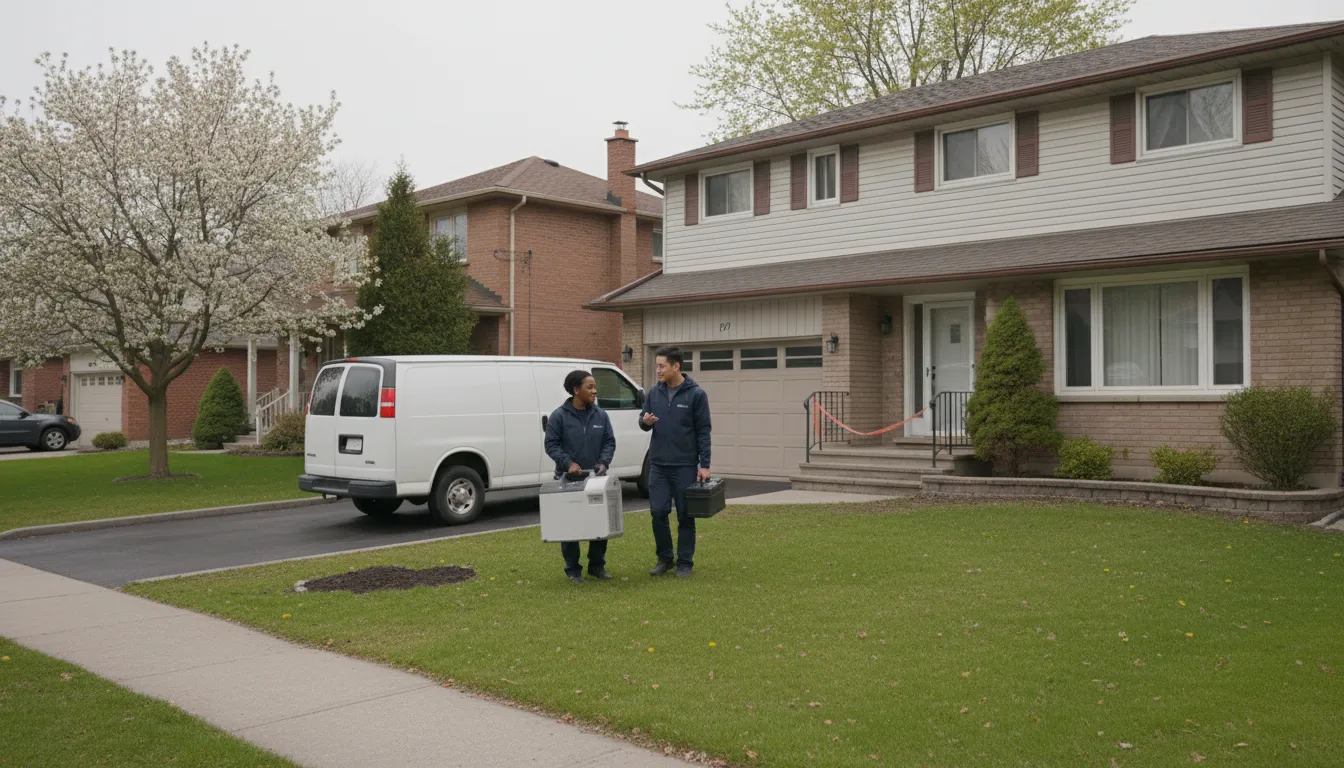
Fast doesn't have to mean vague
A lot of emergency response quotes in the GTA are built around urgency rather than accuracy — a technician shows up, throws down a few air movers, and hands over a bill days later with line items that were never discussed. When you're dealing with a flooded basement at 11pm, it's easy to accept whatever number gets thrown at you.
We scope while we contain
Our technicians document moisture levels and affected materials during the containment phase itself, so the itemized quote you receive reflects the actual job — not an estimate made from the driveway.
Our emergency mitigation process
Every mitigation call follows the same sequence, whether it's a Brampton townhouse or a detached home in Oakville.
- 1
Initial contact and triage
You email us the situation. We ask enough questions to understand urgency and prep the right equipment.
- 2
On-site assessment
We confirm the water source is controlled and check how far the water has spread through the structure.
- 3
Extraction and containment
Standing water is removed and affected areas are contained to stop further spread while we finalize the scope.
- 4
Written mitigation quote
You receive an itemized breakdown of equipment, labour and expected next steps before further work proceeds.
Why homeowners contact us before the water finishes spreading
Mitigation decisions made in the first hours matter more than almost any other part of a water damage job.
We document, not just describe
Moisture readings and photos back up every claim on the scope.
Equipment counts explained
We tell you why a job needs three air movers instead of assuming you won't ask.
Fast without skipping steps
Speed and documentation aren't traded off against each other in our process.
Familiar with GTA construction types
From older Toronto brick to newer Brampton builds, the mitigation approach adjusts to the house.
Honest contents assessment
We tell you plainly what's salvageable rather than assuming replacement is always the answer.
Clear communication throughout
You're not left guessing what stage the mitigation is at.
Emergency mitigation questions
What counts as an emergency mitigation situation?
Active water intrusion — a burst pipe, failed sump pump, or storm-driven flooding — where delay increases the damage. If water is actively spreading, mitigation is the first step before any drying or repair planning.
How is mitigation different from full flood cleanup?
Mitigation is the containment and extraction phase — stopping the damage from spreading. Full cleanup includes structural drying, contents handling and repair planning that follows once the site is stabilized.
Will you give me a number before starting?
You'll get an itemized quote before further work beyond initial containment proceeds. We don't believe in handing you a bill after the fact.
Do you handle mitigation for both basements and upper floors?
Yes — water travels down through a structure regardless of where it started, so we assess the full path, not just the room where it's visible.
Can mitigation happen outside business hours?
Water damage doesn't wait for a schedule, so our intake process is built to handle after-hours requests. Email us with the details and we'll respond with next steps.
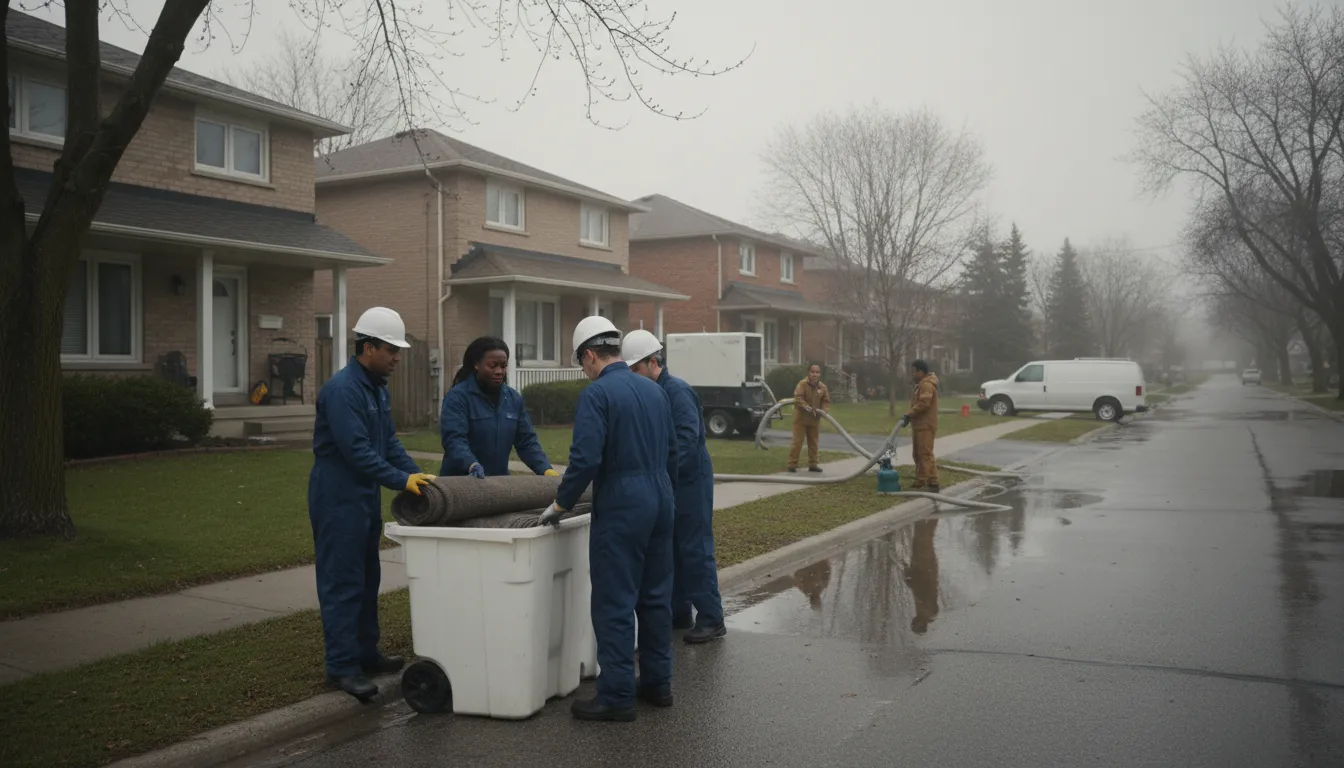
Contain the damage before it spreads further
Email us your situation now and we'll walk you through the mitigation process step by step.
Email Us for a Free EstimateWeather drives water-damage risk — email us if you find water.
Fall water-damage conditions in Brampton, ON
Fall rain around Brampton, ON tests gutters, sump pumps, and foundations; catching leaks and seepage early prevents the slow water damage and mold that surface over winter.
Proudly Serving Brampton, ON
Local, on-time service throughout Brampton and the surrounding area.