Sewage Cleanup Done Right, Explained Plainly
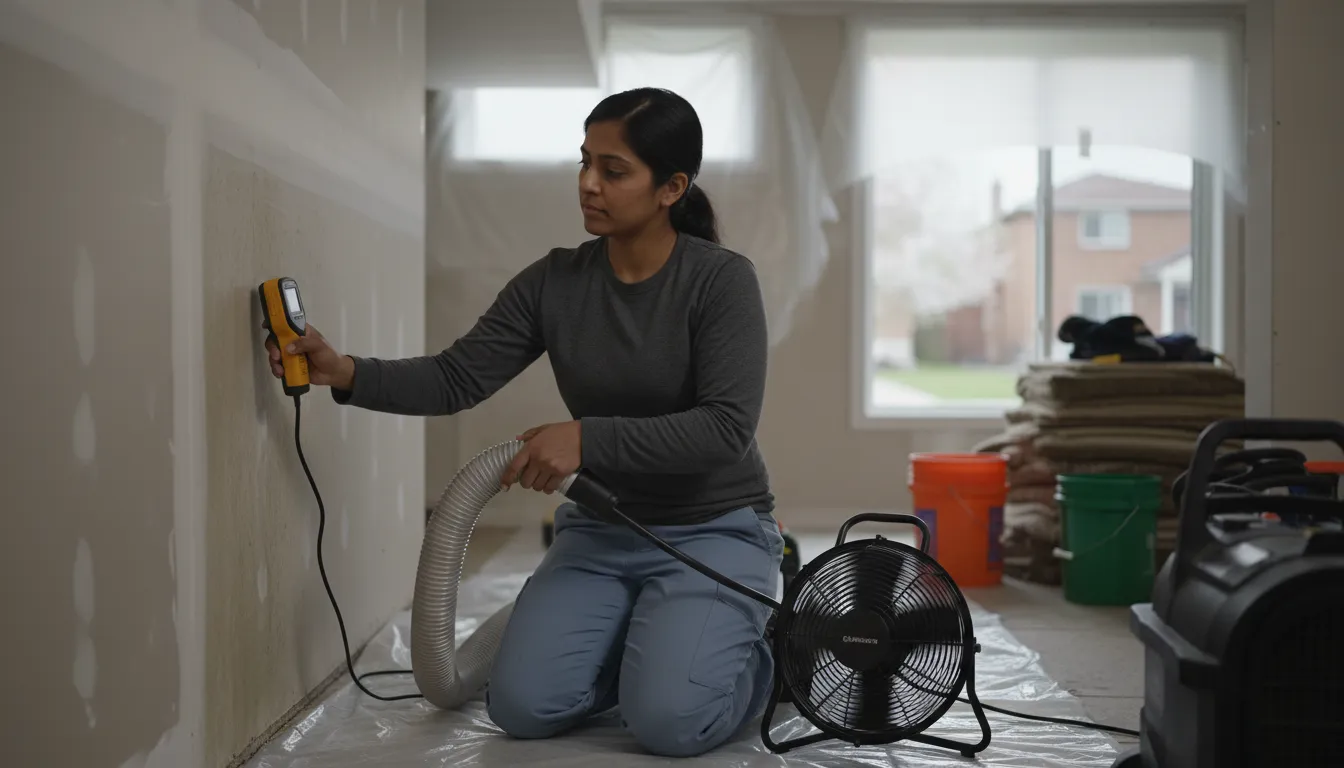
Sewage backups carry real health risks, not just mess. We scope the contamination honestly and explain exactly what proper cleanup requires.
Email Us for a Free EstimateWhy homeowners choose us
Free estimates · No obligation
Sewage cleanup isn't just extraction — it's contamination control
A sewage backup is a different job from a clean water leak, because the health risk changes everything about how materials are handled. Porous materials that touched contaminated water often can't be salvaged safely, regardless of how they look once dried. This is one area where cutting corners has real consequences for the people living in the home.
Contamination category matters
Backups from municipal sewer lines carry different risk levels than a clean supply-line break, and the cleanup protocol changes accordingly.
Porous materials are often a loss
Carpet, drywall and insulation that contacted sewage typically can't be sanitized to a safe standard — we tell you this plainly instead of attempting a shortcut.
Full PPE and containment protocols
Proper sewage cleanup requires containment and protective equipment throughout, not just during the initial extraction.
Disposal follows proper protocols
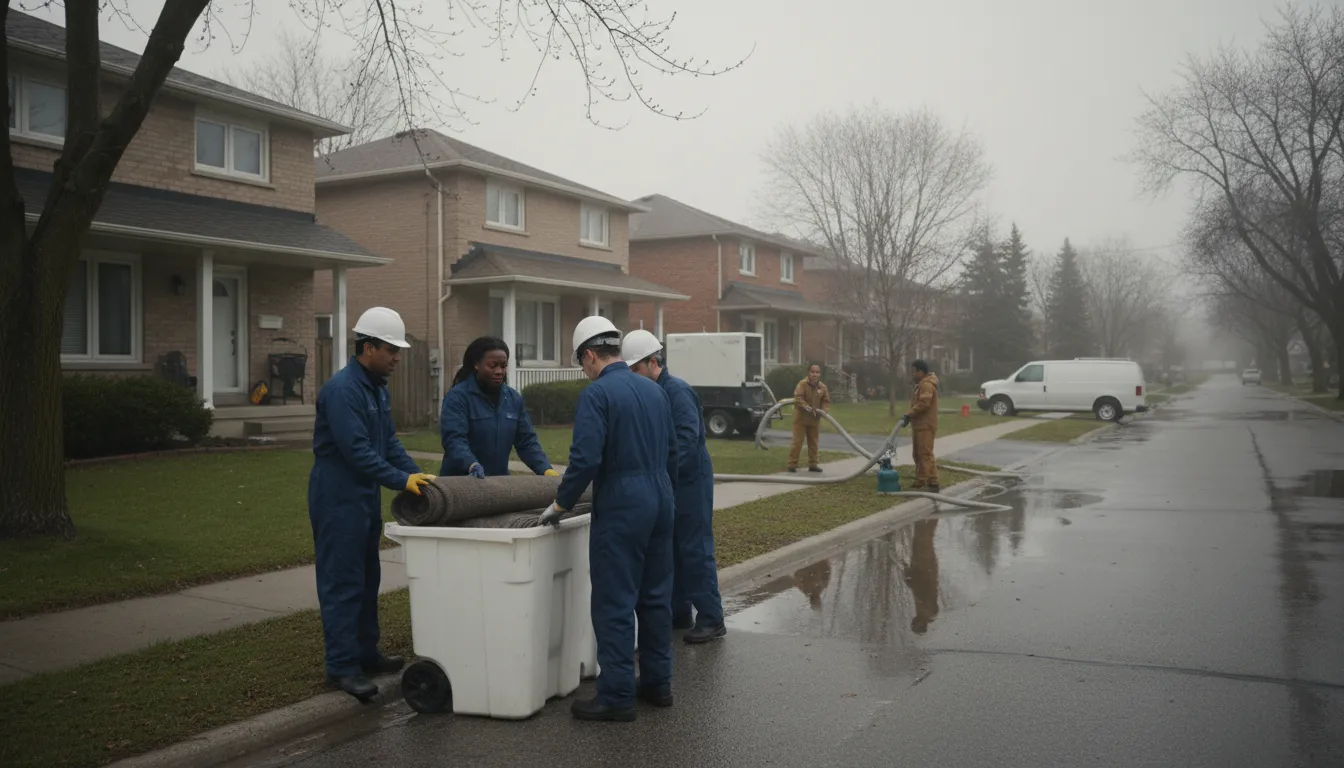
Contaminated debris requires specific handling and disposal, which is reflected honestly in the scope rather than hidden in a vague fee.
Some cheap quotes skip sanitization entirely
Sewage cleanup is one of the easiest jobs to under-scope, because a fast extraction can make a space look clean without addressing the contamination underneath. Homeowners across the GTA have ended up with lingering odours and health complaints months later because materials that should have been removed were instead just dried and painted over.
We scope for the contamination, not just the visible mess
Our sewage cleanup quotes name the contamination category, explain what must be removed versus what can be sanitized, and include the disposal handling required — before any work begins.
Our sewage cleanup process
A methodical sequence built around containment and correct disposal.
- 1
Assess contamination level
We identify the backup source and the associated contamination category before planning removal.
- 2
Contain the affected area
The space is contained to prevent contaminated water or airborne particles from spreading further.
- 3
Remove and dispose of unsalvageable material
Porous materials that can't be safely sanitized are removed and disposed of according to proper protocol.
- 4
Sanitize remaining surfaces
Hard surfaces that can be safely treated are cleaned and disinfected thoroughly.
- 5
Final inspection
We confirm the space meets a safe standard before considering the job complete.
Why homeowners trust us with sewage cleanup specifically
This is the job where shortcuts do the most harm, so it's where we're most insistent on doing it properly.
We name the contamination category
You know exactly what risk level we're dealing with and why.
No shortcuts on porous materials
If it can't be safely sanitized, we say so instead of painting over the problem.
Proper PPE and containment
Protocols are followed fully, not just during the parts that are visible to you.
Familiar with GTA sewer backup patterns
Older combined sewer systems in parts of the GTA back up differently than newer separated systems.
Honest disposal costs
Disposal handling is itemized, not folded into a padded flat fee.
Health-first approach
We treat the health risk as the priority it actually is, not an afterthought.
Sewage cleanup questions
Is sewage backup water always dangerous?
It should always be treated as contaminated, since backup sources vary and testing on-site isn't practical. We approach every sewage job with full containment and PPE protocols regardless.
Will you always tell me if carpet needs to be replaced?
Yes — if a material contacted contaminated water and can't be safely sanitized, we say so directly rather than attempting a shortcut cleaning that leaves risk behind.
Why do sewage backups happen more in some GTA neighbourhoods?
Older combined sewer infrastructure in some established areas of the GTA is more prone to backups during heavy rain than newer separated storm and sanitary systems. We factor this into how we assess a backup's likely cause.
How is sewage cleanup priced differently from flood cleanup?
Contamination protocols add disposal, PPE and sanitization steps that clean-water flooding doesn't require, which is reflected as separate line items rather than folded into one number.
Can sewage cleanup be covered by insurance?
Many policies address sewer backup under specific endorsements. We provide the documentation typically needed, but recommend confirming your coverage directly with your provider.
Get sewage contamination handled properly
Email us the details of your backup and we'll explain the cleanup process and what it actually involves.
Email Us for a Free EstimateWeather drives water-damage risk — email us if you find water.
Fall water-damage conditions in Brampton, ON
Fall rain around Brampton, ON tests gutters, sump pumps, and foundations; catching leaks and seepage early prevents the slow water damage and mold that surface over winter.
Proudly Serving Brampton, ON
Local, on-time service throughout Brampton and the surrounding area.