
Water Damage Restoration Across Halton Region
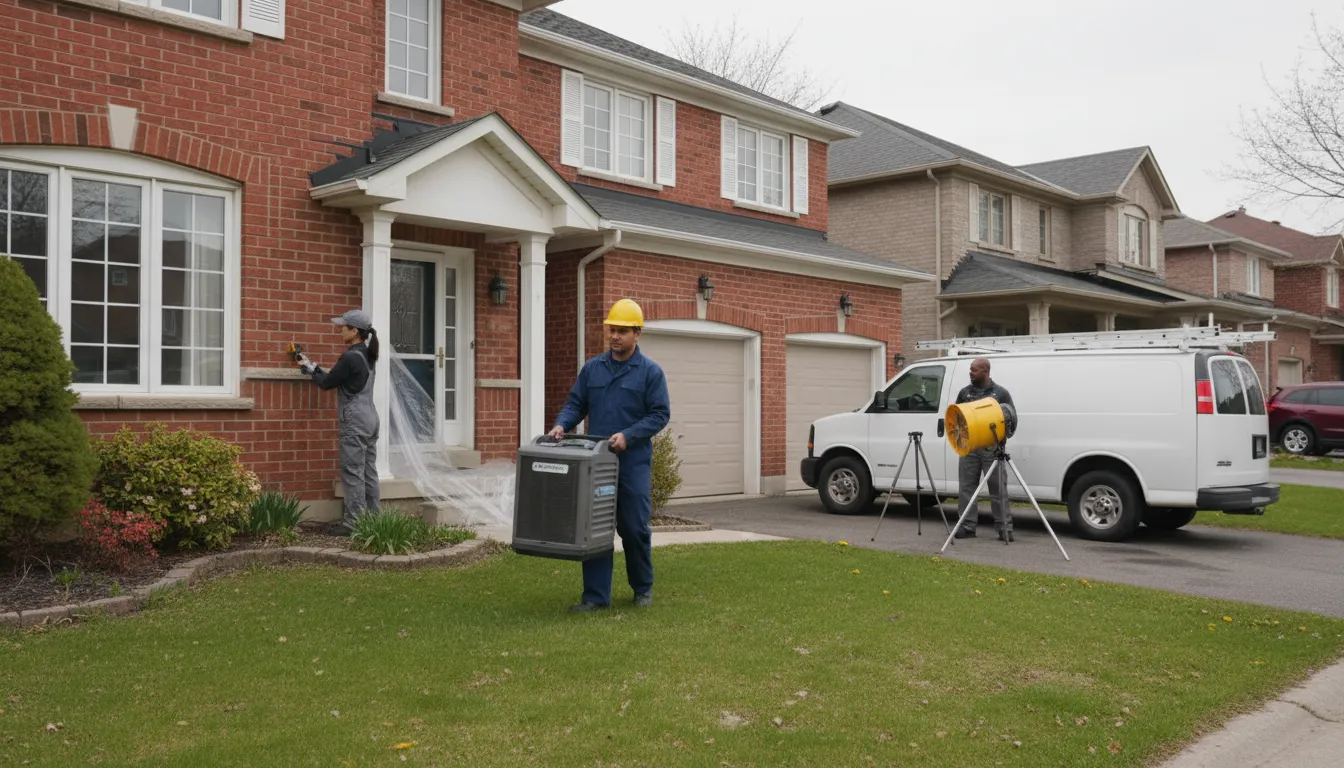
From Oakville's established lakefront streets to Milton's fast-growing subdivisions, we scope Halton homes on their actual conditions, not assumptions.
Email Us for a Free EstimateWhy homeowners choose us
Free estimates · No obligation
Halton Region's range from lakefront to rapidly growing suburbs
Halton Region covers everything from long-established Oakville and Burlington neighbourhoods near the lake to Milton, one of the fastest-growing municipalities in Canada. That range creates two very different sets of water damage risk factors, and a scope has to reflect which one actually applies to your property.
Established Oakville and Burlington homes
Older construction near the lakeshore often deals with higher water tables and aging foundation waterproofing.
Milton's rapid growth brings drainage growing pains
New subdivisions built quickly can have inconsistent grading and drainage infrastructure still catching up to development pace.
Halton Hills' mix of rural and small-town properties
Some properties in Halton Hills rely on well and septic systems, which changes both the risk factors and cleanup considerations.
Escarpment-adjacent drainage patterns
Parts of Halton near the Niagara Escarpment see distinct water flow patterns that can affect basement moisture.
A Milton new-build and an Oakville century property need different scopes
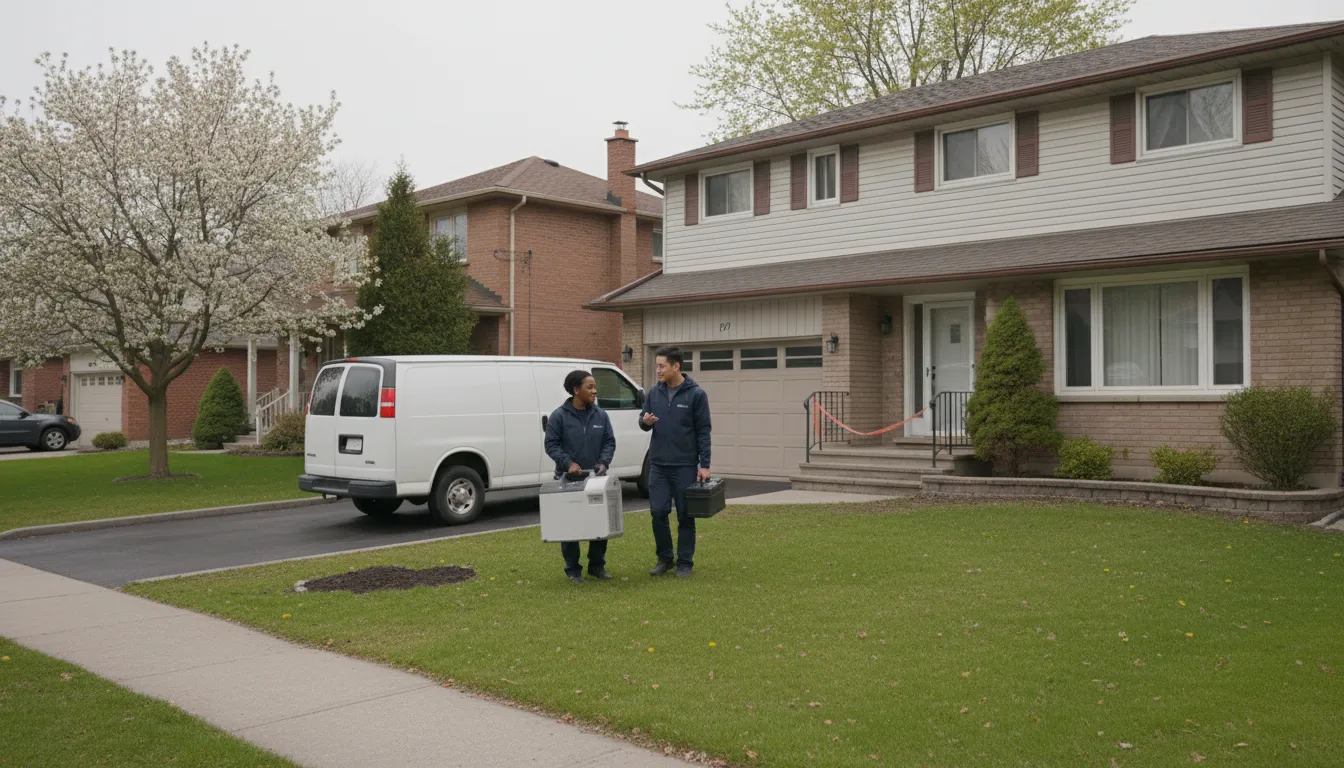
It's tempting for a quote to apply the same formula across Halton Region, but a five-year-old Milton townhouse and an established Oakville home near the lake have almost nothing in common when it comes to moisture behaviour, foundation type, or drainage risk. Treating them the same leads to either an inflated quote or a missed risk factor.
We scope for your property's actual location and age
Our Halton Region assessments account for proximity to the lake, escarpment drainage patterns, and construction era specifically, rather than applying one regional formula across very different housing types.
Why Halton Region homeowners choose our approach
Halton's range from established lakefront to fast-growing new subdivisions demands scoping that actually looks at each property.
Location-specific assessments
Lakefront, escarpment-adjacent, and inland properties are scoped according to their actual conditions.
Itemized quotes throughout
Every line item explained clearly, whether the home is in Oakville or Milton.
Documented moisture readings
You see the same data we use to plan the drying schedule.
Aware of rapid-growth drainage issues
Newer Milton subdivisions are assessed for grading and infrastructure catch-up, not assumed low-risk.
Honest about older lakefront risk
Established Oakville and Burlington homes get realistic timelines for their construction type.
Coverage across the full region
From Oakville and Burlington through Milton and Halton Hills.
How we approach a Halton Region water damage job
A consistent process adjusted for each municipality's specific conditions.
- 1
Assess location and construction era
We identify proximity to the lake or escarpment and the age of the building before scoping.
- 2
Map moisture accordingly
Readings and drying expectations reflect the specific risk factors identified.
- 3
Written, itemized quote
You receive a scope built around your property's actual conditions, not a regional average.
- 4
Mitigation and monitored drying
Equipment is placed and tracked according to the moisture map, with regular updates.
- 5
Final confirmation
We confirm moisture levels are normal before calling the job complete.
Common causes of water damage across Halton Region
Causes vary meaningfully between established lakefront areas and newer growth communities.
High water table near Lake Ontario
Oakville and Burlington properties closer to the shoreline face elevated groundwater pressure.
Inconsistent grading in new Milton subdivisions
Rapid development can leave grading that hasn't fully settled into effective drainage patterns.
Aging waterproofing in established homes
Older foundation waterproofing methods in Oakville and Burlington homes can fail well before visible signs appear.
Escarpment-influenced runoff
Properties near the Niagara Escarpment can see unusual water flow patterns during heavy rain.
Well and septic complications in Halton Hills
Rural and semi-rural properties face distinct water damage sources tied to well and septic systems.
Sump pump failure
Power outages during storms can disable sump pumps in finished basements across the region.
Ice damming after heavy snow
Poorly insulated older roofs are prone to ice damming following significant snow events.
Municipal drainage strain during growth
Infrastructure in fast-growing areas can lag behind the pace of new development.
Halton Region water damage questions
Does 911 Flood serve all of Halton Region?
Yes — we cover Oakville, Burlington, Milton and Halton Hills across the region.
Are newer Milton homes at risk of water damage?
Yes — rapid development can leave lot grading and drainage infrastructure still catching up, which creates real risk even in newer construction.
Why do Oakville and Burlington homes near the lake see more moisture issues?
Proximity to Lake Ontario tends to raise the local water table, increasing groundwater pressure against foundations.
Do you handle properties on well and septic systems in Halton Hills?
Yes — we account for well and septic systems when scoping the source and cleanup approach for rural or semi-rural Halton Hills properties.
How do I get a quote for a Halton Region property?
Email us your location and a description of the situation, and we'll schedule an assessment reflecting your property's specific conditions.
Pick your area
Communities We Serve in Halton Region
Halton Region is highlighted below — every community has its own local page, and we cover the rest of the GTA too.
Get your Halton Region property scoped honestly
Email us today and we'll explain the assessment process for your home's specific conditions.
Email Us for a Free EstimateProudly Serving Halton Region, ON
Local, on-time service throughout Halton Region and the surrounding area.